
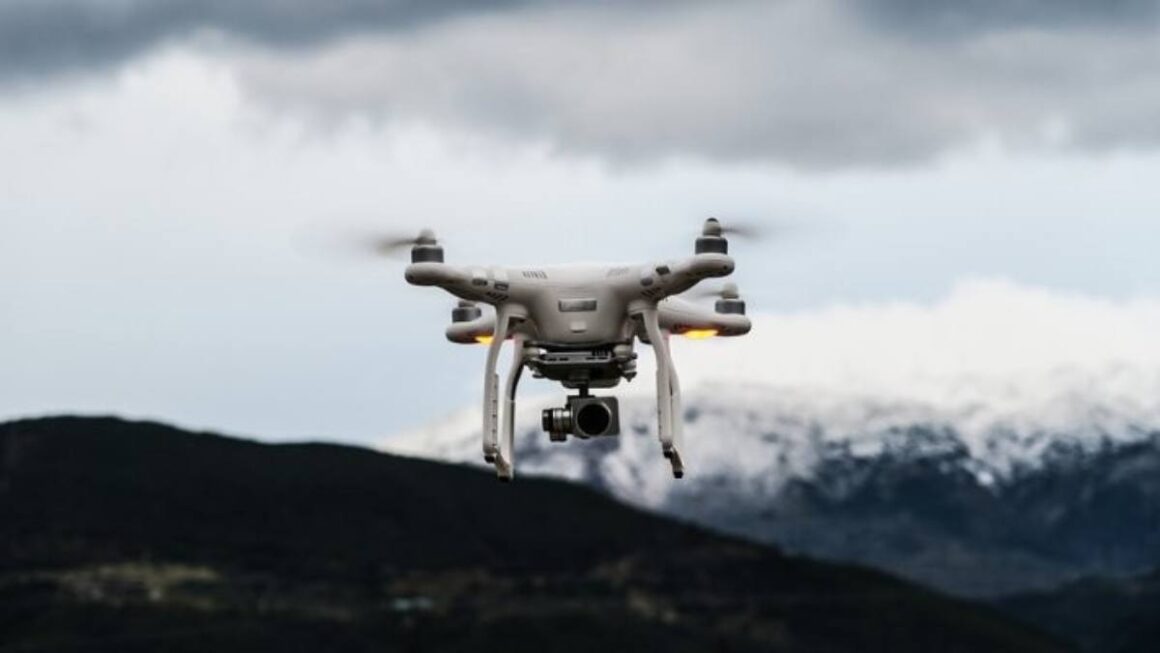
Nowadays, drones have become “objects” of common use, radio-controlled aircraft (that is, with a pilot who guides them from a distance) that are used both in professional, civil and military environments, as well as at the level of consumers. But what are drones, how do they work and what exactly can they do?
The drone market is expected to grow dramatically in the coming years. By 2024, the global drone-related industry is estimated to exceed $43 billion and has already generated $14.1 billion in 2018. This specific market will grow at a CAGR (compound annual growth rate) of 20.5% to almost triple its value in 2024.
But what are they? How do they work? What do they do? What can they do? What types of drones are on the market? Which ones to choose? We answer all these questions in this in-depth report -which is regularly updated-, while trying to offer some useful “service information”, for example, about the courses to become a drone pilot.
Table of Contents
What are drones (meaning of drone)
Basically, drones are robots.
Drones are “remote piloted aircraft” (UAV, unmanned aerial vehicle ), that is, flying devices that do not have a pilot on board but are piloted by an onboard computer or by a pilot who guides them from a distance using radio control. We could say, broadly speaking, that they are the technological evolution of drones, although in reality they are something much more sophisticated and, as we will see in the following paragraphs, they are technologically very advanced objects that can be used in professional contexts and over long distances. characteristics that already distinguish them from the “old” radio-controlled planes.
In principle, they are “flying objects” that, by means of a small motor, have the capacity to fly in open spaces and allow various types of operations to be carried out, such as taking photographs or transporting small weights. However, the fact that they are identified as aircraft (even if remotely piloted) makes it immediately clear that, regardless of the position of the pilot or flight crew, operations must adhere to the same rules and procedures as piloted aircraft.
UAV is the acronym by which we now commonly identify drones, but other terms and acronyms are often used such as RPA (Remotely Piloted Aircraft), RPV (Remotely Piloted Vehicle), ROA (Remotely Operated Aircraft), or UVS (Unmanned Vehicle). System).
They usually have a structure made of light materials, so that they can fly without complications, and a battery that powers the motor of the drones themselves, that is, that allows the movement of the propellers and, therefore, provides the necessary force so that the drone takes flight.
They are available in different variants and versions, each of them adapted to a specific purpose. Drones can be used in different ways, they have different applications depending on their operation and characteristics.
How do they work
Some types of drones are controlled with an app on the tablet, installed on the smartphone or computer, while others are controlled with a remote control similar to the one designed for a game console. Before losing the signal from the controller, professional systems can reach a distance of up to 2 kilometers, while the figure is much less for lower-quality types. Similar considerations can also be made regarding autonomy: they can usually fly for a few minutes (between 15 and 20 in the case of mid-low-range drones), but the flight time of a professional drone can be up to 1 hour.
Drones mainly work in two modes:
- piloted with a radio control that allows the drone to be guided in real time by a pilot
- unmanned, in which case they carry out their task autonomously (after programming the “on-board computer” or with remote control via software)
In the first case, it is RPA -Remotely Piloted Aircraft-, the most common type of drone for personal and consumer use. These are systems equipped with remote control, thanks to which the drone is piloted in real time; These drones allow some basic activities to be carried out, such as filming from above. However, these drones require a certain level of practice to be used in the best possible way, as it can be difficult at first to pilot them and ensure that air currents do not affect you negatively.
In the second case, instead, we are talking about a type known as UAV – Unmanned Aerial Vehicle: in this case we are talking about systems that cannot be piloted and that will perform various operations autonomously during flight. These must be configured before use so that it is possible to exploit the drone according to the particular needs for which it is “programmed”. For example, to film an event, it will be possible to adjust the flight height, stabilize the drone and choose the different angles before the event, and then use the same settings and let the drone work autonomously.
The different types of drones (their structure)
Drones are divided into different families based on their physical characteristics (hardware), and are classified according to these three distinctions:
- WITH A STRUCTURE OF BLADES. These are drones equipped with a motor and blades, whose objective is to offer a stable flight that can be controlled by means of the corresponding radio control, which must have frequencies that are not harmful to people’s health. Drones equipped with a vane motor are called helicopters if there is only one set of blades on the rotor. If the drones equipped with a motor and blades have more than one set of blades, then we will have other types of drones, namely: tricopter if there are three sets of blades, quadcopter if there are four sets of blades, pentacopter if there are five sets of blades, hexacopter for a drone with six sets of blades and finallyoctacopter if the maximum number of blades present on the same drone is reached, that is, eight.
- WITH A FLAT STRUCTURE. There are also bladeless drones, designed to hover: in this case, there are no propellers, which are carefully replaced by two large wings;
- WITH A HYBRID STRUCTURE. Lastly, there are hybrid versions, that is, drones equipped with both systems (motor and wings), but also drones that integrate flight with movement on the ground and, therefore, can be handled with wheels (these are drones that are used for more professional purposes).
As mentioned, drones are also technically known as Remotely Piloted Aircraft Systems (APR) and Unmanned Aircraft Systems (VSP or UAS). This technology is now booming on a global scale, and goes far beyond children’s recreational use.
From a technical point of view, they incorporate various technological components, from sensors (for example, accelerometers, gyroscopes, compasses and, in some cases, GPS in professional drones), to the components of the motors themselves (some models also include ESC to control the speed of rotation), going through radio receivers, cameras, video cameras, robotic arms…
types of drones
Depending on their operation, their technical characteristics and their “extra” equipment (for example, robotic arms or camera drones), drones can be divided into professional drones (in some cases also called business drones and/or commercial drones) and professional drones. non-commercial (most often identified as consumer drones).
1. Consumer drones, not commercial
Non-commercial drones are those for “common use”, that is, for the consumer market, and are often used “simply” to take short shots from above (most are camera drones) or for entertainment. At various events, fairs and conventions, they are also used to entertain the public by letting people try and drive these small objects, often even in competitions of skill.
Non-commercial, or consumer, drones are often considered little more than electronic toys, and that is probably why it is a market that, after booming in past years, is suffering a bit of a crisis (although mini drones are an exception in this regard). At least, this is what emerges from the United States. The Federal Aviation Administration (FAA), the agency of the United States Department of Transportation that regulates and supervises all aspects of civil aviation (including drones), has estimated, as of December 31, 2018, more than 900 thousand models of non-commercial consumer drones, with an estimated 1.25 million consumer drones in use. These may seem like very significant figures, but they are somewhat less significant when compared to professional or commercial drones: again, according to FAA data as of December 31, 2018, each month more than 15,000 commercial drones were registered in the United States (which, unlike consumer drones, must be registered, each of the devices). According to the FAA, at the end of 2018, almost 300 thousand commercial drones were already registered (in 2018 alone) and it is expected that in the next five years it will be this category of drones that will sustain the market.
2. Commercial drones, professional drones
Professional drones, or commercial drones, are more powerful systems than consumer drones and, as the classification itself indicates, they are used professionally and/or for commercial purposes.
They are typically larger than consumer drones, have more advanced tech features and functionality, have longer battery life, stay in the air longer, and can take longer trips than non-commercial drones.
They can also carry packages and objects, sometimes of considerable size and weight, unlike non-commercial drones which, as mentioned, are used more for leisure and entertainment than for professional activities.
Professional drones, for example, are also suitable for holding professional cameras for filming, documentaries, filming in stadiums and sports arenas or during concerts.
3. Drones with cameras
Whether it is consumer drones or professional drones, one of the most common uses of drones is taking photos or videos from above. That is why most of these “flying objects” are drones with cameras.
Depending on the type of drone (consumer or professional) and, of course, the price range, there are drones with different types of built-in photo/video cameras. Therefore, depending on your needs, you should consider:
- the type of video camera installed, checking the resolution of photos and videos that it is capable of producing (VGA, HD, Full HD, 4K, etc., just as we do now with smartphones);
- the type of camera stabilization (to dampen vibrations and keep the image still); professional drones are usually equipped with an advanced stabilization system called a gimbal (it keeps the camera fixed on its axis, so that the images remain motionless without blurring or interference due to vibrations or instability of the drone in flight).
Among the most advanced camera drones are also those equipped with the so-called FPV (First Person View) functionality, thanks to which drone pilots can see in real-time the photos taken by the camera or the video sequences taken by the camera. a camera integrated or loaded in the drone.
4. Mini drones
If consumer drones, according to estimates by the US Federal Aviation Administration (FAA), tend to have a decreasing interest (and market), it may also be because they are more successful in the consumer sector. mini drones, small objects that meet the needs of recreational, entertainment or small photo and video shooting enthusiasts and those who intend to use drones for non-commercial and professional purposes.
Small drones, or better said, mini drones, are very small objects that usually fit in the palm of your hand and are made of ultralight materials. They are not very durable, in the sense that they do not cushion the fall and tend to break, but they are certainly ideal for learning to fly a drone.
Many models are mini drones with a camera, designed for those who want to take photos and videos from above.
Actually, there are also professional mini drones. As always, everything depends on the technical characteristics, functionality and equipment that the drones may have.
Physical characteristics of drones
So here is what you should keep in mind to choose the best mini drone or at least the one that best suits your needs:
- Performance: Mini drones can be easily transported without any special restrictions, but their size often affects their performance as well; therefore, it is worth checking what kind of acrobatics mini drones can do in flight and what kind of stability they have (being little more than toys, at least consumer ones, it is likely that they do not withstand the wind well or that the remote control does not be perfect); if you want a mini drone to do jumps and some acrobatics in flight, it is a good idea to bet on the technology of at least 2.4 G to have an effective remote control;
- Equipment: As mentioned, mini-drones are often used to get started and learn how to use them, and mini-drones with cameras are the most common. If you are interested in this type of drone, it is convenient that you check the “equipment” of the mini drone that you want to buy (type of camera resolution, stabilization, LED lights, etc., obviously taking into account that consumer drones do not have the same equipment and high performance as professional drones);
- Materials: Mini drones, especially consumer ones, are made of plastic and other “poor” materials, so they aren’t very durable; it is easy for them to break when they are dropped for the first time. Therefore, it is advisable to buy small spare parts, especially the propellers. Professional mini drones are usually more durable, but the purchase price is obviously higher;
- Battery life: mini drones have small and often short-lived batteries, so you should consider this parameter according to your needs.
How to choose a commercial drone
As mentioned in the previous paragraphs, there are many differences between drones and it is not enough to distinguish between consumer drones and professional drones. To choose a drone, its technical and operational characteristics must be taken into account, as well as its construction (for example, the materials with which it is made). To understand how to choose a drone, below we list some of the elements that must be taken into account and analyzed before buying it:
- Size and weight: Of course, it depends on your intended use, but it’s always good to start with mini drones (at least to keep the cost down while you get familiar with these dropships)
- Lift capacity (height above ground level): in this case, attention must be paid not only to one’s own “aspirations” and needs but also to compliance with regulations (height and distances during the flight can be subject to regulation);
- Autonomy (battery life): Just like mini drones, one of the most important features of all other drones, whether consumer or professional, is their autonomy. In consumer drones, batteries last between 10 and 30 minutes; if you want more autonomy, you have to go to higher-end models, up to professional drones (but this implies a greater weight, in addition to the regulations that must be complied with), or resort to models that allow you to change the batteries;
- Control (remote piloting and control systems): drones can be controlled via Bluetooth (with a range of 10 to 20 meters), via a Wi-Fi network (with a range of up to 50 meters), or via wireless systems. radiofrequency (in which case the range varies from one model to another, ranging from a few meters to a few kilometers for super-professional drones);
- Jump and acrobatics: as already mentioned for mini drones, for other drones also the ability to jump and perform acrobatics in flight depends on the model, there are semi-professional models capable of performing many acrobatic acts;
- Support for camera drones: As we have seen, camera drones are among the most popular; In addition to the resolution for the output of images, it is also convenient to check the types of support that contribute to stabilizing the camera, making the image photographed or the image taken immobile (without oscillations or interferences due to the vibrations of the drone in flight) ; professional drones are usually equipped with an advanced stabilization system called a gimbal (it keeps the camera stationary on its axis so that the images are still without oscillations or interference due to vibration or instability of the drone in flight);
- GPS: Drones equipped with GPS, which are usually professional drones, are not only able to verify their geographical position autonomously, but they can also “follow” the remote pilot autonomously;
- LED lights: these are usually accessories that are placed on drones used to perform stunts or entertainment shows (or skill competitions) because they make the drones more visible to the public following the events;
- Other accessories: Some drones may be equipped with “extra” accessories such as grippers or robotic arms, especially those used for parcel delivery, for example.
Which consumer drone to choose?
When it comes to consumer drones, that is, those used to pass the time, we have to talk about some models that are capable of offering the opportunity to have fun and a good range of functions without any particular limitations.
The first of these models is the Walkera Runner 250 RTF 3 1574: this model is one of the most common in the consumer category, both because it is not excessively priced and because it has fairly simple functions.
It is a quadcopter equipped with a flight stabilizer to prevent air currents from negatively affecting it during the flight phase, and it should also be noted that it is a model with a video camera that allows filming in HD.
One of the most popular consumer drone models is the Yuneec Breeze 4K N1237. Weighing only one kilo, it uses the GPS positioning system to provide greater flight stability and allow you to reach a precise destination.
Once again, we are talking about a quadcopter that can be flown very easily and that, in addition, allows you to carry out all the different piloting operations in a simple way: with this drone, you can use the special application to take off and fly in the different areas of interest.
In addition, photographing or filming in Full HD is an added value that differentiates this model in particular.
As for the drone models that can be defined as the best, we must mention the DJI Mavic Pro Platinum, an evolution of the classic Pro.
In this case, it should be noted that several improvements have been made, especially battery life and noise reduction that allow you to get the most out of this drone.
The video camera with Full HD resolution, the flight stabilizer and, above all, the possibility of giving orders to the drone, which will carry them out autonomously, as well as the function of the sensors that avoid collisions, have also been incorporated. during automatic flight.
The DJI Phantom 4 is a model that manages to defend itself and allows recording in 4K, as well as taking selfies completely different from the classics, with shots that are of the highest quality.
Therefore, it is also a drone that can satisfy all needs, given the various functions that characterize the same model.
Professional drone models
The market for professional drones is very broad and they are often drones developed with certain characteristics to perform very specific tasks. Therefore, it is quite complex to try to make some kind of classification of the models, however, there are some characteristics that must be taken into account when thinking about buying a professional drone.
Professional drones usually have several motors, 4, 6 or 8, which determines their type (quadcopter, hexacopter or octocopter). They are made of resistant materials, have more or less sophisticated onboard control units, are usually equipped with a high-definition camera (with a stabilization system) and have a good load capacity (obviously, these characteristics always depend on the model that you use). you want to buy).
As an example, here are some examples of professional drones:
- DJI Mavic 2, a drone capable of withstanding the force of five winds is especially popular with photographers and videographers; It is a drone that incorporates cameras with the latest DJI 3-axis gimbal technology, with transmission at 1080p at a maximum distance of 8 km. The battery lasts between 30 and 31 minutes;
- DJI Mavic Pro is another professional drone from DJI with pro-level 4K video capture and 12 MP photos. It has “intelligent” flight modes, such as ActiveTrack, TapFly and Gesture mode, not only to make the flight more “fluid”, but also to allow the pilot greater control;
- MUVISTAR 1000 is a professional (high-end) drone for aerial video and photo recording with 3-axis universal gimbal and large cameras weighing up to 3Kg (such as Canon 5D, Nikon D800, Sony Alpha and Blackmagic). It is a SAPR drone with 8 motors made entirely of carbon and with a diameter of 1 m; the drone is also equipped with a black box with flight log + GPS data;
- H2O waterproof drone is a professional drone with an IP67 (water resistant) body; therefore, it can fly in the rain and is also capable of landing and taking off from the water without any problem thanks to its floating structure. It has a flight time of 20 minutes and can carry up to 1kg of payload in addition to its own weight. The drone is equipped with a 2-axis gimbal system (also waterproof) that allows you to carry a small camera (a waterproof GoPro or one with a waterproof case);
- X-Cam 700UV, a drone designed for precision agriculture, is an aircraft built in carbon fiber and equipped with folding arms for transport and retractable landing gear; it has a flight autonomy of 30 minutes and a maximum payload of 4 kg; this drone provides georeferenced images with a very high pixel/cm resolution thanks to the dedicated control electronics with GPS/Glonnass and the Parrot Sequoia multispectral camera supplied with the aircraft, which provides very high-resolution images and video sequences;
- Explorer 1000 IR is a professional “super” drone designed for security applications, in particular for aerial video surveillance or for the search for missing persons in the event of catastrophes, accidents, and natural disasters; the drone is capable of flying in the rain, with a range of up to 20 km thanks to a long autonomy (up to 70 minutes). The drone has a modular carbon structure, can reach a speed of 60 km/h and a maximum altitude of 4,000 m, can carry up to 3 kg and is equipped with an HD camera with encrypted video and data transmission.
Parrot and Phantom Drones
Parrot drones are drones equipped with high-resolution cameras and video cameras (depending on the model) that are used in various fields; there are consumer drones and mini drones with different price ranges and more or less simple uses (such as taking photos and videos from above), but there are also professional drones that are used for precision agriculture, video surveillance, environmental monitoring, help in case of disasters, accidents, calamities…
Parrot consumer drones or mini drones are quite light and easily transportable, depending on the model they can take photos and videos from above with different image/video resolutions. Low-end drones have poor battery life, but some models are equipped with grippers and can carry objects.
- Parrot professional drones are drones designed for commercial/professional use and have different characteristics depending on their intended use. There are on the market:
- Parrot drones for agriculture, for the inspection and analysis of crops, including large ones
- Parrot drones for the construction and real estate sector, used for visual and thermal inspection, an inspection of buildings and homes, 3D modeling to take the necessary measurements to make any budget but also for the 3D modeling necessary to supervise a work;
Parrot drones for public safety: search and rescue of people, investigation of crime or accident scenes, reconnaissance of places, location of fires or other natural disasters, etc.
In reality, Parrot drones are not the only professional drones used for this type of activity; As we have seen in the section dedicated to professional drones, there are many drones available on the current market. To get a detailed picture, we suggest you follow the sites and blogs dedicated specifically to drones and professional drones.
Among the perhaps slightly better-known drones, in addition to the Parrot, are the Phantom, the range of the DJI company.
Phantom drones are semi-professional drones that are mostly used for shooting videos from above. There are different models and price ranges, but in any case, the Phantom drones are the ones that the parent company DJI has designed specifically for professional filming from above (but classified as hobby drones, and not professional drones).
Currently, available Phantom drone models are divided into four series (as of August 2019) and have different characteristics, especially regarding the type of camera and the resolution achieved.
The latest models of Phantom drones are the 4 series, which incorporate cameras up to $K with an obstacle detection system, a stabilization system and a flight time of around half an hour. Therefore, this type of Phantom drone can also meet certain professional requirements. The Phantom 4 RTK drone, for example, although it flies in low latitudes, is a professional drone that can be used in various sectors, such as real estate or construction.
What are they used for and how are they used (applications of drones)
Drones are an extremely serious matter and are having a real impact on various economic sectors and will have an even greater impact in the near future, going beyond the transport of goods and merchandise. Take the example of agriculture: by using drones equipped with special sensors, it is now possible to optimally monitor crops on farms. Drones, suitably equipped with thermal and multispectral cameras, can collect data that report on the appearance of pathogen attacks and identify stressful situations at an early stage. Also, in the very delicate field of natural heritage protection, unmanned aircraft can be very useful in the search for missing persons .and the prevention of forest fires, as well as for the monitoring of fire-fighting operations when it is underway. In the energy sector, drones are already used to inspect power lines and monitor photovoltaic and wind power plants, as well as gas and oil pipelines. In the health sector, drones are often used to deliver medicines and medical supplies in war zones, natural disaster zones and in all cases where field hospitals need to be set up.


Today these radio-controlled flying objects are used for various purposes such as professional use.
In this case, we are talking about radio-controlled planes that are used to make video recordings from above: on certain occasions, this type of article is used to make aerial video recordings to evaluate a certain terrain and create increasingly detailed maps while, in other circumstances, the same drones are used to make aerial video recordings such as wedding films and others, which are made by professionals in the sector who have decided to use this type of instrument to carry out this type of work.
But also in the military field, drones are used for aerial filming, which is carried out on the ground where the police have to intervene and which is the mission they have to carry out.
Drones can drop bombs in certain war zones, giving them a huge advantage over enemy troops.
In addition to their military purpose, drones are also used, at the moment in America and the East, to deliver various packages. In fact, Amazon Prime has decided to exploit one of the least exploited uses of drones: using the mechanical arm, or rather the hook of the drone, the leading company on the web has decided to speed up its deliveries, to the point that once Once the purchase has been made, the product is delivered on the same day, using the radio control of the drone to make it reach the customer’s destination.
Additionally, drones are now also used to search for missing persons. Thanks to image transmission, it is possible to display high-definition images and find out if there are people missing in a certain area due to accidents or if they need to be searched for in other areas.
Of course, keep in mind that the purpose of the drone is also to allow its owner to have a lot of fun, be it filming or flying and learning how to use it for personal purposes.
Another type, but no less important, is the use of drones in film and television. Before his arrival, filming had to be done by plane or helicopter, which was very expensive. Now that they are available at a more than affordable price, many photographers and videographers can shoot from the air without a big budget.
Therefore, the meaning of a drone is completely different depending on the type of use made of the same item, which can be used in several different fields.
Examples of drones for the environment
Let’s give some concrete examples: after the Fukushima disaster in March 2011, drones flew over the damaged nuclear power plant to photograph the buildings and the flooded coast. Thanks to the data transmitted by these planes, the disaster management team was able to cool down the overheated reactors and minimize damage.
In Belize, on the other hand, the Wildlife Conservation Society tries to protect the coral reef with APRs, detecting activities that damage the habitat and illegal fishing. Similarly, the Nature Conservancy uses autopilot aircraft to monitor the exact number of migratory birds in California. Or NOAA, the US meteorological agency, uses drones to collect climate data to help understand the impact of climate change on the planet.
Military drones
Military drones have been built and used for the wars in Iraq, Afghanistan, Pakistan, Syria, and Yemen, while others have been used to protect the borders of the United States and Canada.
These military drones are often equipped with fairly sophisticated weapons and are used to carry out controlled air strikes, even in inaccessible areas.
Military drones are often used for reconnaissance, surveillance and intelligence missions, but unfortunately, the news has shown us that military drones can also be successfully used for military strikes in warfare missions.
Military drones are unmanned aerial vehicles (UAVs) that are piloted remotely (even from several hundred to thousands of kilometers), usually by satellite.
Amazon Drones
In June 2019, Amazon introduced its ‘drone fleet’ to the public. As announced a few years earlier (in 2013), Amazon drones will be used for deliveries.
Amazon drones will be able to make deliveries within a radius of 15 kilometers and transport up to 3 kilos (which today represents almost 80% of the packages sent by Amazon), so Amazon Prime customers will be able to make deliveries within a maximum period of half an hour from the purchase.
In reality, Amazon’s drones are not yet available, they are just beginning to circulate in the United States after the green light from the Federal Aviation Administration (FAA), but the commercial proposal includes ad hoc services for customers, Amazon Prime Air.
Google Drones (Google Wing)
In fact, the drone business has been sniffed out for years by a name everyone is familiar with: Google/Alphabet, which has invested considerable resources in its “Project Wing” project, now also known as Google Wing. whose objective is to build small automated aircraft that allow the rapid delivery of goods in a few minutes, avoiding traffic.
After several years of experimentation, this goal now seems within reach: Big G has announced that its prototype has passed tests organized by NASA and the Federal Aviation Administration (FAA).
The system developed by the Google team was tested at Virginia Tech University, where the FAA set up a site for testing devices and technologies. In tests, the Google team was able to monitor the flight paths of multiple drones simultaneously from a single platform: three from Project Wing making deliveries and two from other companies simulating search and rescue operations. Thanks to the software, the drones were able to control each other without the manual intervention of an operator to avoid collisions.
Drone safety
The only obstacle to the definitive explosion of the drone phenomenon is security, which should be at least as high as that guaranteed by all other types of aircraft. A goal that, for the moment, still seems far away: according to European information, in 2016 more than 1,200 safety-relevant events were recorded in Europe, including failed collisions between drones and aircraft; highlighting the urgent need for a modern and flexible EU regulatory framework. For this reason, the Commission has asked the European Parliament and the Council to support its December 2015 proposal to create a regulatory framework for drones. Pending approval, the Single European Sky Air Traffic Management Research Joint Undertaking (SESAR), set up by the Commission,
How to become a drone pilot (drone pilot courses)
According to current regulations, to use certain drones (due to certain characteristics of weight, speed and attainable altitude, distance from the remote pilot) it is necessary to have a flight certificate, that is, to be recognized as a drone pilot.
Drone pilots, also called dronistas, become drones after a training course and after receiving a license to fly the so-called APR (Remotely Piloted Aircraft) and SAPR (Remotely Piloted Aircraft Systems).
To become a drone pilot, you need to attend courses. The courses for drone pilots usually consist of two modules, a theoretical course and a practical one, after which it is necessary to take exams to obtain a license, a kind of permit/license that recognizes the ability to fly drones.
Depending on the drone you intend to fly, different certificates or licenses may be required; In general, drones between 300g and 4kg require one type of license, while drones between 4 and 25kg require another type of certificate/license.
However, the drone pilot course and certification are not enough by themselves to be able to fly drones. Authorization from ENAC, the National Civil Aviation Authority, is required:
“To use an APR/SAPR for professional reasons, it is necessary to present a Declaration, in the case of non-critical and critical operations in standard scenarios, or obtain authorization for critical operations in non-standard scenarios. In addition, it is necessary to obtain a pilot certificate, insurance and, in certain airspaces, authorization to occupy the airspace”.
Sustained market growth in 2018 – 2023
The prospects for the drone market are certainly positive: in 2018 the global market is expected to close with a total spend of 9.3 billion dollars (according to an IDC report). But the most interesting thing is that the sector will grow at an annual rate of 32.1% in the next five years. Another significant fact is that drones used for business purposes will absorb more than half of the total business volume, traveling at an annual growth rate of 37.1% in the next five years. In 2018, the public services and construction sectors will be the ones that invest the most in drones (925 and 808 million dollars, respectively), followed by sectors such as the manufacturing and process industries. In the next five years, however, there will be significant growth rates in areas such as education (+72, 8% per year) and public administration (70.1). Big changes are also coming geographically: in 2018, the United States will be the largest geographical market for drones, with a turnover of 4.3 billion in 2018, followed by Western Europe and China. However, the exponential growth of the Chinese market (+63.2% per year) will allow it to surpass UAS in 2022. Data, in short, testify to what extent organizations continue to explore a wide range of applications and use cases of drones, ranging from aerial photography to drone deliveries, precision agriculture monitoring and even medical deliveries. However, drones will need to continue to evolve technologically to avoid excessive traffic in the sky. Big changes are also coming geographically: in 2018, the United States will be the largest geographical market for drones, with a turnover of 4.3 billion in 2018, followed by Western Europe and China. However, the exponential growth of the Chinese market (+63.2% per year) will allow it to surpass UAS in 2022. Data, in short, testify to what extent organizations continue to explore a wide range of applications and use cases of drones, ranging from aerial photography to drone deliveries, precision agriculture monitoring and even medical deliveries. However, drones will need to continue to evolve technologically to avoid excessive traffic in the sky. Big changes are also coming geographically: in 2018, the United States will be the largest geographical market for drones, with a turnover of 4.3 billion in 2018, followed by Western Europe and China. However, the exponential growth of the Chinese market (+63.2% per year) will allow it to surpass UAS in 2022. Data, in short, testify to what extent organizations continue to explore a wide range of applications and use cases of drones, ranging from aerial photography to drone deliveries, precision agriculture monitoring and even medical deliveries. However, drones will need to continue to evolve technologically to avoid excessive traffic in the sky. 300 million in 2018, followed by Western Europe and China. However, the exponential growth of the Chinese market (+63.2% per year) will allow it to surpass UAS in 2022. Data, in short, testify to what extent organizations continue to explore a wide range of applications and use cases of drones, ranging from aerial photography to drone deliveries, precision agriculture monitoring and even medical deliveries. However, drones will need to continue to evolve technologically to avoid excessive traffic in the sky. 300 million in 2018, followed by Western Europe and China. However, the exponential growth of the Chinese market (+63.2% per year) will allow it to surpass UAS in 2022. Data, in short, testify to what extent organizations continue to explore a wide range of applications and use cases of drones, ranging from aerial photography to drone deliveries, precision agriculture monitoring and even medical deliveries. However, drones will need to continue to evolve technologically to avoid excessive traffic in the sky. that testify to the extent to which organizations continue to explore a wide range of drone applications and use cases, ranging from aerial photography to drone deliveries, precision agriculture monitoring and even medical deliveries. However, drones will need to continue to evolve technologically to avoid excessive traffic in the sky. that testify to the extent to which organizations continue to explore a wide range of drone applications and use cases, ranging from aerial photography to drone deliveries, precision agriculture monitoring and even medical deliveries. However, drones will need to continue to evolve technologically to avoid excessive traffic in the sky.
Opportunities for the European economy
The drone revolution is not exclusive to Amazon, Google and other IT giants interested in the world of logistics. In fact, according to an estimate by the European Commission, small and medium-sized companies represent more than 80% of the companies involved in the development, production and operation of drones. “Drones will have a far-reaching impact on the European economy. These high-tech systems will not only reduce costs and enable more efficient operations in different sectors but will also create opportunities for European companies to develop technologies, fueling this revolution.